


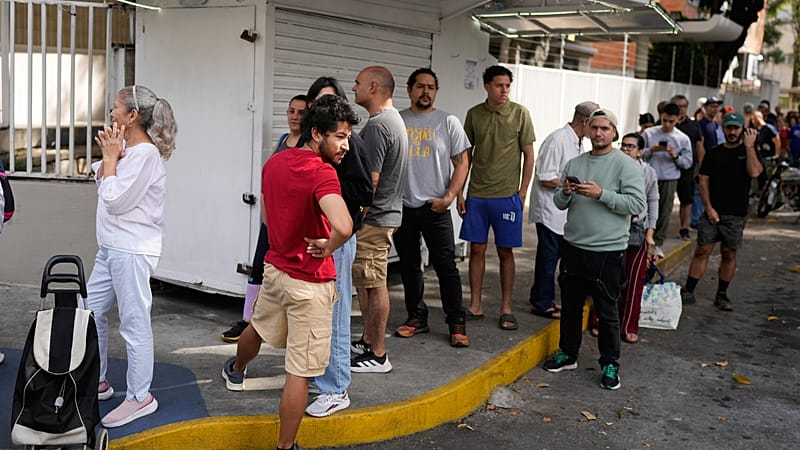
The streets of Caracas are abuzz with a nervous energy, as residents grapple with the growing uncertainty following a seismic announcement: the alleged capture of Venezuelan President Nicolás Maduro by the United States, as declared by President Donald Trump. This development has sent ripples of apprehension through the capital, prompting a palpable shift in daily routines and a surge of preparations for an unknown future.
A City Under Strain: Scenes from Caracas
The capital city of Caracas finds itself at the centre of a brewing storm, with residents exhibiting a clear sense of unease and a proactive approach to stocking up on essential supplies. The news of President Maduro’s alleged capture has spurred many to rush to local markets and pharmacies, a visible manifestation of their desire to ensure their households are well-provisioned amidst the escalating uncertainty.
Long queues have become a common sight outside grocery stores and pharmacies, as citizens navigate the aisles with a heightened sense of urgency. The atmosphere is one of quiet preparedness, with individuals and families making conscious efforts to secure necessities. Beyond the immediate need for provisions, some residents are also contemplating or actively making arrangements to leave the capital, seeking to distance themselves from the perceived immediate risks.
The visible presence of police vehicles and armed officers patrolling various sections of the capital underscores the heightened state of alert. While daily life continues to unfold, it does so against a backdrop of palpable tension. The usual rhythm of the city is overlaid with an undercurrent of anxiety, a stark reminder of the fluid and unpredictable nature of the current political climate.
The Ripple Effect: Impact on Daily Life and Preparedness
The apprehension gripping Caracas is not merely a passive reaction; it is translating into tangible actions. The rush for groceries is a classic indicator of public concern over potential disruptions to supply chains and the availability of essential goods. Pharmacies, too, are experiencing increased foot traffic, as individuals seek to ensure they have access to necessary medications and health supplies, further highlighting the widespread desire for self-sufficiency in the face of potential instability.
The consideration of leaving the city, by some, speaks volumes about the depth of the prevailing fear. This move, often a last resort, suggests a significant level of concern regarding personal safety and the potential for civil unrest or further political upheaval. It points to a breakdown in the sense of security that underpins everyday life, pushing individuals to consider drastic measures.
The increased visibility of law enforcement and military presence, while intended to maintain order, also serves as a constant reminder of the volatile situation. For the residents of Caracas, these are not just abstract political developments; they are immediate concerns that directly impact their safety, their access to resources, and their overall sense of well-being.
Navigating the Unknown: A Population on Edge
The situation in Caracas is a stark illustration of how political events, particularly those involving the leadership of a nation, can trigger widespread public anxiety. The alleged capture of President Maduro, if confirmed and substantiated, represents a significant turning point, the full implications of which are still unfolding.
The coming days and weeks will likely be a period of intense observation and adaptation for the people of Venezuela. Their proactive measures – stocking up on supplies, considering relocation, and navigating a city under heightened security – are all testament to their resilience and their determination to cope with a rapidly evolving and uncertain environment. The collective response in Caracas paints a vivid picture of a population bracing itself for whatever the future may hold.








Discussion about this post